Digital Marketing Agency in Rwanda: The Buyer’s Guide
At some point in the last few years, almost every senior marketer in Kigali has sat across from an agency that talked a confident game but couldn’t show a single piece of work done for a Rwandan brand. The portfolio was Lagos and Nairobi with “East Africa” in the tagline. The proposals were polished but the targeting options they described don’t actually exist in Rwandan Facebook inventory. The retainer looked reasonable until it became clear the team had never written a line of Kinyarwanda copy.
Choosing a digital marketing agency in Rwanda is a high-stakes decision. Get it right and you gain a partner who extends your team’s capability, brings market knowledge you don’t have in-house, and moves fast when the brief demands it. Get it wrong and you spend 12 months nursing a retainer that produces dashboards but not results.
This guide is for marketing directors, CMOs, and brand leads at established Rwandan organisations: domestic corporates, regional banks expanding from Kigali, development-sector bodies building brand presence, tourism operators growing international reach. It covers what Rwanda’s digital landscape actually looks like, the capabilities that separate a strong local partner from a regional generalist, and the questions worth asking before you sign.
The BLU Newsletter — FREE
Get What’s Working in Marketing Right Now
WhatsApp funnels, AI search, the ad platforms outperforming everyone. Get the useful content before it’s obvious — from an agency in the middle of it across 5 countries.
Join thousands of marketers. Unsubscribe anytime.
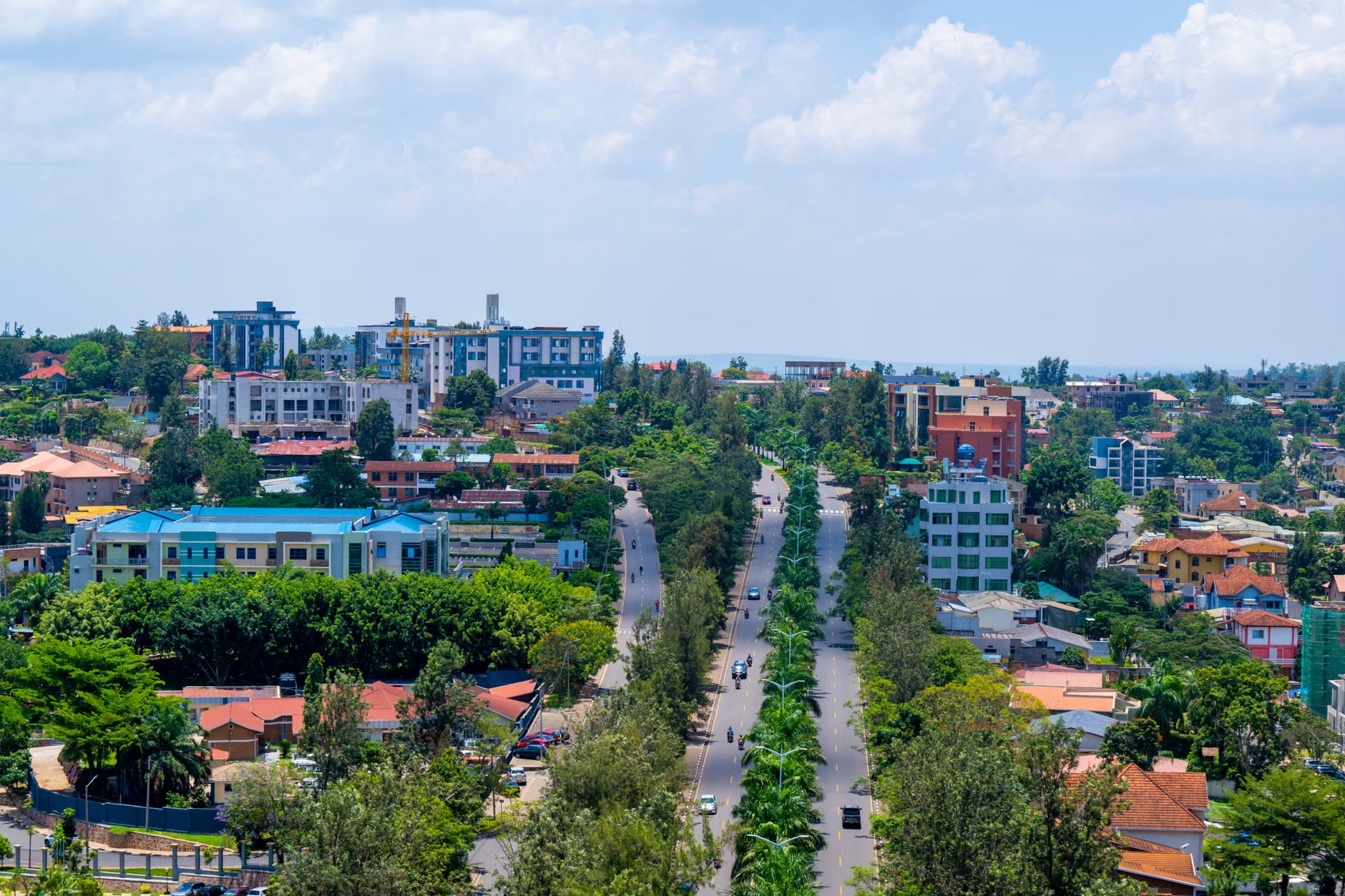
Kigali Is Not a Smaller Version of Nairobi
Rwanda’s commercial centre is maturing quickly. Smartphone penetration is climbing, and MTN and Airtel have extended mobile internet well beyond Kigali into the provinces. Mobile money (MTN Mobile Money, Airtel Money) is embedded in everyday transactions in a way that should be actively shaping how your campaigns convert. Social media usage concentrates around Facebook and WhatsApp for mass-market audiences, with Instagram growing steadily among younger urban consumers and LinkedIn carrying real weight in the B2B, government, and development-sector spaces where many established Rwandan organisations operate.
What makes Rwanda genuinely distinct from “generic East Africa” is the language stack. Your creative needs to work in at least two of three: Kinyarwanda for mass-market and community-facing campaigns, English for corporate and institutional audiences, and French for sectors where francophone relationships still matter, particularly parts of government, NGO networks with French-speaking headquarters, and cross-border trade into DRC. An agency that writes all its copy in English and adds a quick Kinyarwanda translation at the end will consistently underperform. Language isn’t a creative layer on top of strategy; it shapes tone, register, and what actually connects with a specific audience.
Radio is not a legacy medium here. Outside Kigali, radio reach extends to audiences that social alone won’t touch. If your brand operates nationally — financial services, FMCG, telecoms, NGO programmes — you need a partner that treats radio as a live planning tool integrated into your media mix. A purely digital agency that can’t speak to broadcast will leave part of your national market uncovered.
The NGO and development-sector dimension is also worth naming explicitly. A significant share of organisations running meaningful marketing budgets in Rwanda have some connection to government programmes, international development funding, or donor requirements. That creates specific expectations around brand guidelines, reporting standards, and sometimes procurement processes. An agency experienced with this sector will save you friction that a generalist team won’t anticipate.
The Capabilities a Serious Rwanda Digital Agency Brings
Not every agency operating in the region has the same capability stack. When evaluating a partner for digital marketing in Rwanda, these are the areas that separate a genuinely prepared team from one that will fill in the gaps on your retainer.
Local creative production. Can the agency produce Kinyarwanda content that sounds natural, not translated? Do they have production talent and creator relationships based in Rwanda? For campaigns targeting Rwandan consumers at scale, this is non-negotiable. And for brands building in the “Made in Rwanda” space, the creative needs to reflect something real about Rwandan identity, not a regional genericisation of “African”.
Mobile-first media planning. The majority of your target audience reaches you through a phone. Your agency should be thinking mobile at the brief stage, not adapting desktop formats as an afterthought. That means vertical-first creative, WhatsApp Business API integration where the channel fits, and a media plan built around how Rwandans actually consume content.
MTN and Airtel ecosystem fluency. Mobile money integration, USSD-based campaign mechanics, and telecom platform partnerships are live levers in Rwanda. An agency that knows these channels can design conversion paths that match how transactions actually happen in this market. One that doesn’t will hand you a web funnel optimised for a different context and wonder why conversion rates disappoint.
Sector-specific experience. Rwanda’s established organisations cluster in financial services, telecoms, manufacturing, tourism, government, and the NGO and development space. Each has its own regulatory environment, audience dynamics, and brand sensitivities. A partner who understands what a campaign for a Rwandan bank looks like, or how to build brand equity for a tourism operator targeting post-pandemic international visitors, will reach the right insight faster than a generalist team learning the sector as they go.
Analytics benchmarked to Rwanda. Cost per reach in Kigali is not the same as in Nairobi or Johannesburg. Engagement benchmarks vary by platform and audience. Your agency should be setting KPIs from local data and explaining what strong performance looks like in this specific market, not importing global averages and calling them targets. If you want a framework for how to think about marketing performance measurement, our post on measuring marketing ROI in Uganda covers the underlying principles; the approach translates directly to the Rwanda context.
For the full scope of what a digital partner should be able to deliver at this level, see our digital marketing services overview.
Scope: What to Keep In-House and What to Hand Over
One of the recurring decisions for marketing directors in Kigali is how to divide responsibility between an internal team and an agency. There’s no universal formula, but a few principles hold across most established organisations.
Keep brand strategy, audience definition, and final approval in-house. These decisions depend on organisational knowledge an external team can’t fully replicate. Your agency should inform and challenge them, not own them. A good agency will push back on a brief that doesn’t hold together; a weak one will execute whatever you hand them and send you a report at the end of the month.
Hand over execution-heavy and expertise-dependent work: paid social campaign management, SEO, content production at volume, influencer programme coordination, and performance analytics that require platform-specific expertise. These are areas where the cost of building in-house capability typically exceeds the cost of a well-run retainer, and where an experienced agency will outperform an in-house team learning on the job.
The split most common among established Rwandan organisations: an in-house social media manager handling community management and real-time posting, with an agency owning paid media, creative production, and strategy. That model works well when roles and escalation paths are defined from the start of the relationship, not figured out after the first campaign goes live.
What a Strong Brief Looks Like
A thin brief is one of the most reliable predictors of a underperforming agency relationship. Go to market with only a budget figure and a vague objective and you’ll get vague proposals in return.
A brief worth writing covers: which audiences you’re targeting and where they sit geographically and by sector; which languages matter and why; the business outcomes you’re tracking (not just marketing metrics like reach and impressions); whether your internal approval process can move at the pace digital requires (a three-week approval cycle for social content creates problems that no agency can work around); and what previous campaigns have taught you, along with any data you can share.
Agencies that ask these questions before they propose anything are the ones worth talking to. Proposals that land within 48 hours of a first conversation, before any of those questions have been explored, are usually templates dressed in your brand colours.
The standard for how to build a longer-term marketing approach in this context is worth thinking through before you brief. Our piece on choosing a digital marketing agency in Uganda walks through the same strategic evaluation process for that market, and the criteria overlap significantly at the leadership level.
Questions Worth Asking Before You Sign
Proposals show you what an agency wants you to see. Conversations show you how they think. Three questions that cut through quickly.
“Show us a Rwanda campaign that didn’t meet target. What happened, and what did your team do?” Competent agencies have this answer. Those who only surface successes won’t be able to manage your campaigns honestly when something doesn’t perform. And something always eventually will.
“Who writes your Kinyarwanda copy, and can we meet them?” This reveals whether language capability is a genuine competency or something the team will figure out when they need it. The answer to this single question has predicted more retainer outcomes than any other.
“Who owns the performance conversation when results slip?” You want a named account lead who will pick up the phone — not a monthly dashboard and a silence when the numbers are difficult.
A few additional red flags worth slowing down for: a portfolio built entirely on social content with no evidence of strategic or full-funnel thinking; reporting that leads with followers and impressions rather than conversion or business impact; a team that’s physically somewhere else and visits Kigali quarterly; retainer agreements that lock in 12 months without a performance review clause.
None of these individually disqualifies an agency. A pattern of them does.
Working With an Agency That Knows Rwanda
BLU Flamingo works with established organisations across Rwanda and the wider region. Our Rwanda engagements are built on local creative production, trilingual capability (Kinyarwanda, English, and French where the sector requires it), sector experience across financial services, tourism, and development-sector clients, and media planning that integrates digital, radio, and OOH into a coherent strategy rather than running separate silos.
We take a direct approach to scope: if a brief is better served by a capability we don’t offer, we’ll say so. What we focus on is full-funnel digital strategy, paid social and search, content and creative production, influencer programmes, and performance analytics — all built around Rwanda’s actual market dynamics. You can see the full scope of our Rwanda work on our Rwanda country page.
If you’re building a shortlist, reviewing an existing agency relationship, or working through what your digital programme should look like for the next 12 months, we’d welcome the conversation. Get in touch with the BLU Flamingo team and tell us what you’re working on. No pitch deck required for a first call.