Short-Form Video Marketing Strategies That Work in Africa
Here’s something most African brand managers will admit quietly but rarely say out loud: their short-form video content isn’t working. Not the reach numbers. Those can look decent. We’re talking about conversion, brand recall, and the kind of audience growth that actually compounds over time.
Short-form video marketing has been “the next big thing” since at least 2020. Six years later, brands that figured it out early are sitting on audiences in the hundreds of thousands. The ones that didn’t are still posting polished 30-second brand videos to 400 followers and wondering why nothing sticks.
Here’s what’s actually driving results on TikTok, Instagram Reels, and YouTube Shorts for brands operating across African markets, and where most brands are still losing ground.
The BLU Newsletter — FREE
Get What’s Working in Marketing Right Now
WhatsApp funnels, AI search, the ad platforms outperforming everyone. Get the useful content before it’s obvious — from an agency in the middle of it across 5 countries.
Join thousands of marketers. Unsubscribe anytime.
The Platform Is Not the Strategy
The first mistake brands make is choosing a platform and calling that a strategy. “We’re doing TikTok now” tells you nothing. What you post, how often, what triggers a save or a share: those are the strategy. The platforms aren’t interchangeable, and conflating them costs brands both time and money.
TikTok in markets like Nigeria, Kenya, and South Africa skews toward entertainment-first content. Audiences there are sophisticated. They’ll clock an ad pretending to be organic content within the first two seconds. If your brand shows up trying to sell before it entertains, you’re done. The algorithm also rewards consistency more aggressively than the others, so brands that post once a week and wait for a viral moment almost never get one.
Instagram Reels tends to reach a slightly older, higher-income segment in many African markets, which makes it the stronger platform for lifestyle, fashion, beauty, real estate, and B2B-adjacent content. Reels lives inside Instagram’s ecosystem, so it feeds your profile and works alongside Stories. If your audience is already there and engaging, Reels makes more sense as your primary channel than chasing a TikTok audience you haven’t built yet.
YouTube Shorts is the underutilised one. African creators and brands have been slow to commit to Shorts, which is both a problem and an opportunity. YouTube’s search intent is fundamentally different: people come looking for specific things. A Shorts strategy built around search (how-tos, explainers, product demos) will outlast the algorithm trends that dictate what performs on TikTok today but not tomorrow.
Not sure which platform makes the most sense for where your business is right now? Talk to our team before you spend six months building on the wrong one.
What Content Formats Actually Drive Short-Form Video Results
Most brand-produced short-form video is forgettable. It’s produced by a content team following a brief that asks them to be “relatable but professional,” which produces content that’s neither.
The formats that consistently perform across African markets:
- POV and behind-the-scenes content. Audiences want to see how things are made, how your team operates, or what the inside of your world looks like. A fintech brand in Lagos that documented its product sprint from prototype to launch got more authentic engagement than any polished ad it had run that year. Specificity wins.
- Creator-led partnerships over polished ads. Working with mid-tier creators (10K to 200K followers) who have genuine community trust consistently outperforms glossy brand-produced videos, often at a fraction of the cost. The key is finding creators whose audience aligns with yours, not just those with the biggest numbers. Our influencer partnership work runs on this principle: audience fit first, follower count second.
- Trend-led content with a clear brand angle. This doesn’t mean jumping on every sound or dance challenge. It means having someone monitoring what’s gaining momentum and asking whether there’s a genuine on-brand way to participate. Brands that do this well post the timely version before the trend peaks. Brands that do it badly post the cringe version two weeks after it’s dead.
- Educational content that earns trust. In markets where consumers are still building confidence in digital brands, short-form education is underrated. A South African insurance brand that used 45-second explainers to demystify common policy terms built a comments section full of people tagging their family members. That’s an organic referral loop without any formal mechanics behind it.
The Consistency Trap (And How to Escape It)
Consistency is the advice everyone gives and almost no brand actually follows. The standard guidance is three to five posts per week per platform. For most in-house teams covering multiple channels while also doing their actual jobs, that number isn’t realistic.
The more honest version: three posts a week with content that has a clear point of view will outperform seven posts of filler every time. Algorithms across all three platforms are increasingly sophisticated at measuring engagement quality, not just volume. Low-quality content posted at high frequency can actively suppress your account’s reach.
Build a realistic content calendar, not an aspirational one. If you can reliably produce two good short-form pieces per week, design your strategy around that. Then batch-produce a week ahead so a busy period doesn’t leave a two-week gap in your feed that resets whatever momentum you’ve built.
Our social media management approach always starts with capacity, mapping what the team can actually sustain, before building the content architecture. It’s the opposite of how most brands start, and it’s why most content plans fall apart by month two.
Production Quality: Where the Threshold Actually Sits
Short-form video doesn’t require expensive production. But it does require a minimum technical standard that many brands consistently underestimate.
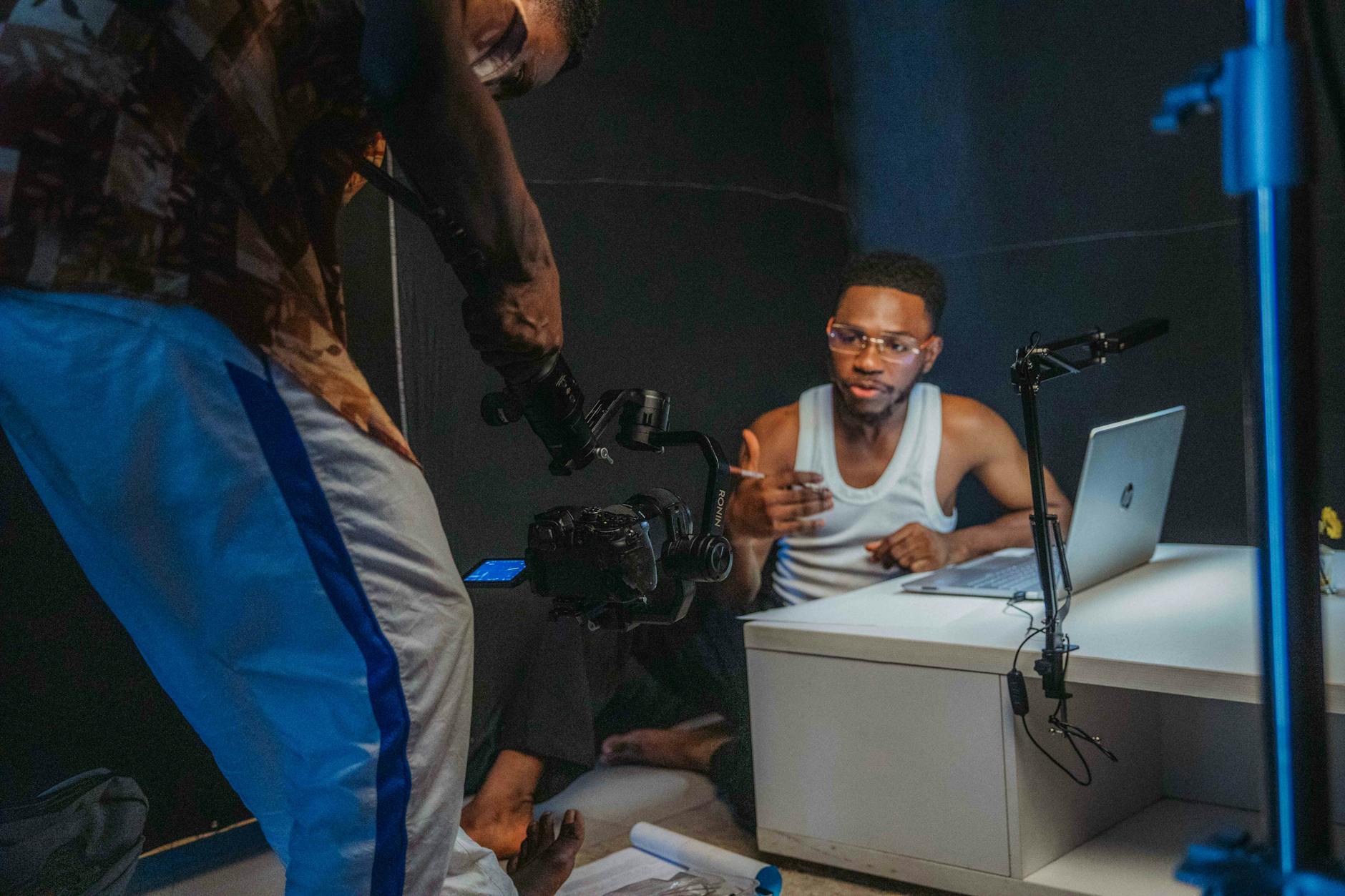
Audio is non-negotiable. Viewers will happily watch content shot on a phone in natural light. They’ll close the video immediately if they can’t hear clearly. A decent lapel microphone costs less than most brands spend on coffee for the content team in a week.
Lighting matters more than the camera. A ring light or a room positioned near a large window will make a smartphone look professional. Dark, grainy footage signals low production value regardless of how well-written the script is.
Beyond equipment, the hook is everything. You have roughly 1.5 to 2 seconds on TikTok and Reels before someone scrolls. The opening visual and first spoken words have to earn the next three seconds. Not the next sixty. Just the next three. Train your team to ask: “Would I stop scrolling for this?” If the answer isn’t immediate, the opening needs a rewrite.
For brands building out a content creation capability, getting these fundamentals right early is far more valuable than investing in expensive equipment before you’ve found your creative voice.
The Gap Between Views and Business Results
Short-form video marketing is a brand-building lever, not a direct-response channel. Brands that treat every Reel like a product ad miss this entirely. But brands that post content with no connection to any business objective are equally lost.
The bridge is an intentional content strategy that maps content themes to business objectives. If you’re trying to grow awareness in a new market, your content mix looks different than if you’re trying to drive app downloads or footfall to a physical location. Without that mapping, you’re creating content for its own sake.
Nigerian D2C brands that drive consistent traffic to their product pages typically combine short-form video with a strong link-in-bio setup and a clear call to action in every caption. Not every post needs to sell directly. Some are pure education, some entertainment, but the architecture means viewers who want to go further know exactly where to go.
When short-form is working, you’ll see it in follower growth, profile visits, link clicks, and saves. If reach is up but saves are flat, your content is being seen but not valued enough to revisit. That’s a signal to shift the content mix before you scale what isn’t converting. Understanding how video traffic interacts with the rest of your funnel matters: this breakdown of conversion rate optimisation covers the downstream mechanics well.
Paid and Organic: They Work Better Together
Organic short-form video and paid social advertising aren’t competing approaches. The smartest brands use organic to test what resonates, then put paid spend behind the posts that show genuine traction.
This is more efficient than producing bespoke ad creative from scratch. It also gives your paid content native-looking social proof: real comments, real shares. That’s something polished ad creative rarely achieves out of the box. An organic video with 40,000 views and 800 comments is a fundamentally different social ad than a freshly uploaded clip with zero engagement history.
For brands operating across multiple African markets, this approach also helps localise intelligently. A content format performing well in Kenya may need visual or language adjustments to land in Nigeria or Rwanda. Organic testing surfaces that before you spend on paid scale. On why paid social can’t be treated as a bolt-on, this piece makes the case for treating it as core infrastructure.
Build the Habit Before You Build the Plan
Every brand we talk to has a content strategy document. Most of them aren’t consistently executing it. Short-form video marketing succeeds through repetition, iteration, and the willingness to post something imperfect rather than wait forever for something flawless.
Start with one platform. Learn what your specific audience responds to. Iterate quickly: short-form formats have fast feedback loops, so you don’t have to wait months to know if something’s working. Build in a review cadence, looking at performance every two weeks and asking what you’d do differently with the next batch.
The brands winning on short-form across Africa right now aren’t the ones with the biggest budgets. They’re the ones who showed up consistently, read their audience accurately, and kept adjusting. That’s a process, not a talent. And it’s one you can build.
If you’re ready to put a short-form video strategy in place that’s tied to real audience data and actual business outcomes, let’s talk about what that looks like for your brand.